Turkey’s resumption of high-level contacts with the Sulaymaniyah-based Patriotic Union of Kurdistan (PUK) after nearly a decade opens the door to a new era in bilateral relations, the policy of the Kurdistan Region of Iraq (KRI), and regional competition, while unfolding at a critically important junctural turning point.
This critical opening in Ankara’s KRI policy is both a result of the "Terror-Free Turkey" process positively impacting Turkey's relations with Kurdish groups in the region, and is related to the war between the US/Israel and Iran, specifically prompting Iran-aligned actors in Iraq to seek a new rebalancing in their foreign policy.
For over 30 years, establishing simultaneous good relations with the KRI's two powerful ruling parties—the Erbil-based Kurdistan Democratic Party (KDP) and the PUK—can offer Turkey significant advantages in terms of spreading its influence across Kurdish geopolitics throughout the entirety of the KRI, increasing commercial partnerships and investments (particularly in energy), ensuring the security of its southern borders, and contending in the regional power struggle with Iran.
Why Did the KDP-Centric Perspective Transform?
The struggle against the PKK, which has been the primary determinant of Ankara's KRI policy, has also directly influenced the course and limits of bilateral relations for many years, depending on the stance of Kurdish parties in the region toward this issue. While Ankara achieved a clear alignment with the Barzani family-led party through both its military bases and operations in the KDP-controlled regions of Duhok and Erbil, it experienced various crises in its relations with the Talabani family-led PUK in Sulaymaniyah on the grounds that the PKK operated freely there.
As part of the “Terror-Free Turkey” process, the PKK’s decision to disband and lay down its arms had a significant positive impact not only on Ankara’s domestic affairs but also on the course of its relations with Kurdish actors in Iraq. In addition to the contributions of the KDP, one of the key mediators in the process, it was noteworthy that the KYB also hosted a group from the PKK in Sulaymaniyah last July to lay down their arms. In response, Ankara’s decision in October 2025 to lift the flight ban it had imposed on Sulaymaniyah—citing the organization’s presence in the city—led to the interpretation that this issue, which had caused a crisis between the two actors, had lost its significance or been resolved.
Another development that softened relations along the Ankara-Sulaymaniyah line was the repercussions of the US/Israel-Iran war that began in February. Although the US objectives regarding the overthrow of the regime in Iran were not fully realized during the war, Turkey's position as a non-belligerent party, its role as a peace mediator, and its increasing regional influence pushed Iran-aligned Iraqi actors toward a new rebalancing. Just as certain Iran-aligned Iraqi Shia groups—which once opposed Turkish bases in Iraq—have recently increased their contacts with Ankara, the PUK’s warm messages toward Turkey, its support for the "Terror-Free Turkey" process, and the steps it took to repair relations also fell into this category. Another important factor facilitating this rapprochement in bilateral relations was the PUK's support for the election of Iraqi Turkmen Front Chairman Muhammed Seman Ağa—who is close to Ankara—as the rotating Governor of Kirkuk.
Normalization Along the Ankara-Sulaymaniyah Line and the Period of Rift Between the KDP and PUK
Turkish Ambassador to Baghdad Anıl Bora İnan’s meeting with PUK-affiliated KRI Deputy Prime Minister Qubad Talabani and PUK President Bafel Talabani in Erbil on June 4 marked a critical symbol of normalization along the Ankara-PUK axis. This meeting was recorded as the historical milestone where the negative image in Ankara regarding PUK leader Talabani was dispelled, and Talabani officially posed for photographs with a Turkish diplomat for the first time in many years.
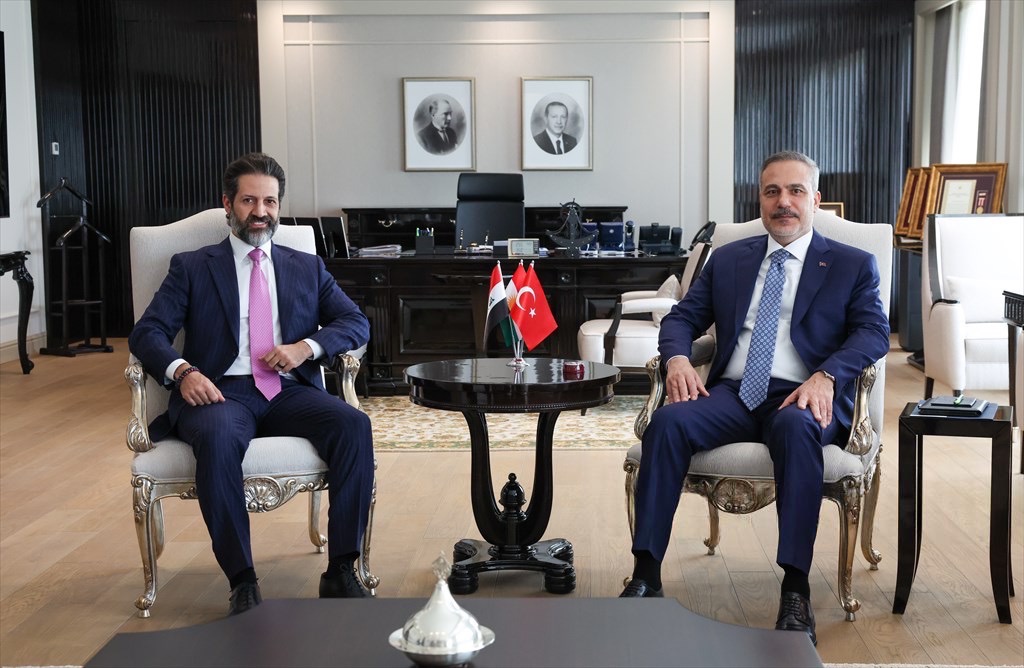
Following this, National Intelligence Organization (MIT) Chief İbrahim Kalın’s meeting with PUK President Bafel Talabani and Qubad Talabani in Sulaymaniyah on July 1, and Foreign Minister Hakan Fidan’s meeting with Qubad Talabani in Ankara on July 3, signaled the onset of a period in which mutual visits between the Ankara-Erbil line would likewise extend to the Ankara-Sulaymaniyah line. This development underscored that the phase of repairing Turkey-PUK relations has been completed, and a phase of mutual rapprochement has opened.
However, concurrently with the period in which Turkey has diversified its KDP-centric perspective—which spanned nearly the last decade—in its KRI policy, disagreements within the nearly 22-month-long government formation negotiations between the KDP and the PUK have escalated, bringing discussions of a dual administration back to the agenda.
In a conjuncture where the "Terror-Free Turkey" process even thawed the ice between the KDP and the SDF (the PKK’s Syrian offshoot), leading to Mazlum Abdi being hosted in Erbil multiple times, the escalation of the KDP-PUK dispute stems from the structural and chronic power struggle between the two major Kurdish parties.
Within this scope, the PUK’s alliance with the Sulaymaniyah-based New Generation Movement, which brought its seat count to 38 against the KDP’s 39 in parliament, helped it oppose a KDP-dominant government and demand a 50-50 governance model in the KRI, reminiscent of the era of the party's founding leader, Jalal Talabani. The deepening division between the KDP and the PUK and the months-long failure to form a new government pose both a negative picture democratically and an obstacle to Turkey’s holistic KRI policy.
Bridging the Ankara-Erbil-Sulaymaniyah Axis
The PUK’s maintenance of contentious relations with a country like Turkey—a prominent NATO member, a gateway to the West, and a major hub for energy exports—had led to Sulaymaniyah’s isolation in regional politics and economics. Similarly, this state of affairs in Turkey’s KRI policy had long stood as an obstacle before a phase that could enhance Ankara's influence in the region.
At this juncture, the normalization in Ankara-Sulaymaniyah relations opens the door to a new era not only for these two actors but undoubtedly for Erbil as well. While the KDP views its close relations with Turkey as a strengthening card in its domestic political competition with the PKK and the PUK, these sincere ties have reflected on economic relations and contributed to the Turkmens in the KRI aligning closely with the KDP.
On the other hand, close ties between Turkish leaders and KDP officials—most notably KRI President Nechirvan Barzani—came to the fore, leading to the development of joint stances in regional politics between Ankara and Erbil. Although the rapid steps taken to repair and develop ties in PUK-Ankara relations break the KDP's monopoly on relations with Turkey, they are not expected to negatively impact the long-standing Ankara-Erbil relations.
Conversely, Ankara's development of holistic and comprehensive policies toward the KRI, engaging with all actors, will undoubtedly positively impact the KRI's internal stability, security, and the achievement of reconciliation, balance, and harmony between the KDP and the PUK. In this context, Ankara's ability to forge good relations with both deeply rooted Kurdish parties should not only strengthen the scope of Turkish foreign policy toward the KRI, but also contribute to resolving the governmental crisis between the KDP and the PUK and limiting the motivations behind dual administration debates.
Turkey's globally successful mediation moves in the Russia-Ukraine, US-Iran, and Palestine issues serve as clear examples that it can similarly take initiatives for its immediate neighbor, the KRI. The fact that the KDP and the PUK have failed to achieve a rapprochement to resolve the government crisis even after the Twelve Day War and the war that began in February indicates how challenging this process might be. Nevertheless, just as Iraqi Kurdish actors contributed to the "Terror-Free Turkey" process, Turkey can play a greater role as a reliable regional power for Iraqi Kurds in fostering harmony, stability, and prosperity within the KRI.
In line with the spirit of this new era in Turkey-KRI relations along the Ankara-Erbil-Sulaymaniyah axis, multilateral positive steps to be taken must encompass not only diplomatic talks, but also commercial investments, economic actions involving the export of rich subterranean resources in Sulaymaniyah, and greater inter-societal interaction.
Harmony between the KRI's two deeply rooted parties and the enhancement of stability and security in the region will undoubtedly benefit both the KDP and the PUK alongside their people. At the same time, it will contribute to Turkey in areas such as energy, commercial partnerships, trust, the full security of its southern borders, and the better coordination of the PKK’s disarmament process, which constitutes a crucial phase of the "Terror-Free Turkey" process.
Ankara’s policy of seeking regional solutions to Middle Eastern conflicts free from external interventions, as seen in the US/Israel-Iran war, can contribute not only to resolving the disputes between the KDP and the PUK, but also to handling the contentious areas between the KRI and Iraq in a more constructive manner. Considering Turkey's strong position in the KRI and its growing economic, political, and diplomatic influence across Iraq, this factor will also positively influence the regional power competition with Iran.