



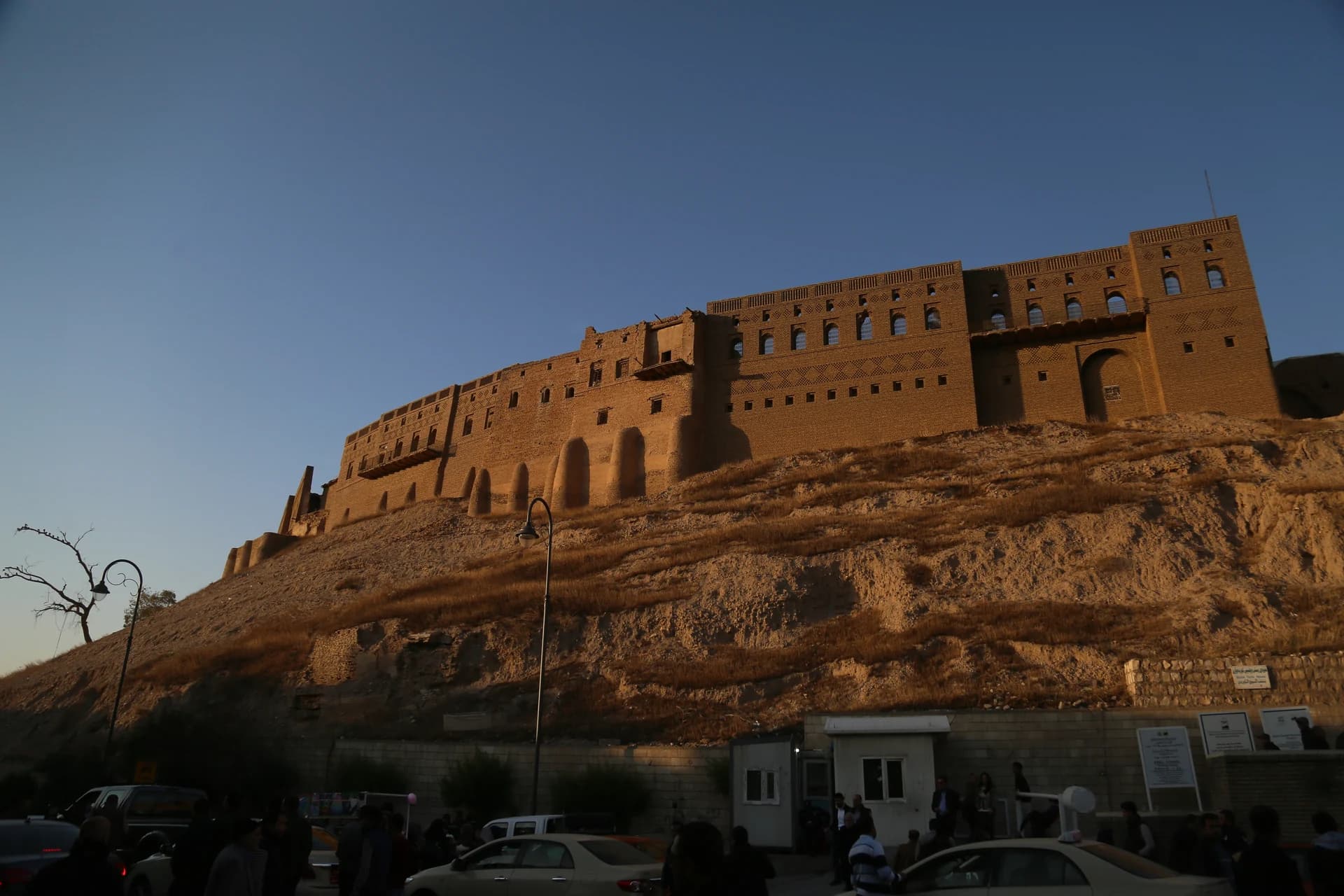
Shaped by nearly 8,000 years of continuous settlement, Erbil Citadel has served as a neighborhood, a stronghold, and a landmark of co-existence.
Rising above Erbil, in the Kurdistan Region of Iraq, it carries traces of how generations built their homes, maintained traditions, and developed a sense of belonging.
The Citadel stands on a mound formed by thousands of years of building and rebuilding in the same place. Throughout its history, Erbil has been home to diverse communities, many of whom lived alongside one another and contributed to the city’s cultural landscape. Alongside this history of settlement, the Citadel served as a stronghold during periods of conflict. According to the historical chronology included in Erbil Citadel’s UNESCO World Heritage nomination dossier, in 1236, Mongol forces burned Erbil’s lower city and besieged the Citadel for 45 days before withdrawing after a substantial ransom was paid. While the lower city suffered destruction, the Citadel withstood the siege.
Today, the Citadel remains an important landmark in the heart of Erbil and a symbol of heritage and identity for the people living in the city. Its significance is reflected in the local description of Erbil as “the city of the citadel and minaret,” placing the landmark within the way residents describe their home.
Everyday life inside and outside of the Citadel
The Citadel was once a residential neighborhood rather than a monument as of today. Its courtyard houses and decorative brickwork reveal patterns of domestic life and craftsmanship, while its religious buildings and communal spaces reflect shared practices.
The hammam, built in 1775, provided residents with bathing facilities and a place for social interaction. The conversations, encounters, and routines associated with the hammam demonstrate how ordinary activities contributed to the cultural meaning of the Citadel.
Today, representing the multiculturalism of the citadel the Kurdish Textile and Cultural Museum, the Turkmen House and many other cultural hubs take place in restored historic residences. Their collections connect physical objects with the weaving knowledge and craftsmanship passed between generations. Other restored houses have hosted exhibitions, performances, and cultural activities, introducing new cultural uses into spaces that were previously homes.
The life of the Citadel also extends into the city below. The Qaysari Bazaar, shops, passageways, and nearby teahouses place it within Erbil’s commercial and social center. With all of its elements the Citadel remains as a destination for shopping, working, and socializing besides its glorious past.
Outstanding universal value of Erbil Citadel
In 2014, Erbil Citadel was inscribed on UNESCO’s World Heritage List under criterion (iv), which recognizes buildings and settlements that illustrate significant stages in human history.
Its outstanding universal value lies in the relationship between the archaeological mound and the town built above it. The street pattern associated with the late Ottoman period remains visible in the narrow alleys extending from the main gate and in the arrangement of its residential neighborhoods. Houses constructed along the mound’s edge form a continuous outer façade, giving the Citadel the appearance of a fortified structure.
These features show how residents organized urban life within the physical boundaries of the mound. The Citadel is therefore significant for both the history buried beneath it and the surviving urban form on its surface.
Conservation and belonging
In 2007, residents were relocated as part of efforts to preserve the Citadel, interrupting its long history as an inhabited neighborhood. However, one family remained to maintain the Citadel’s tradition of continuous habitation. Hence, the relationship between former residents and the site did not disappear. Later on, former inhabitants, tourists and citizens continued to return for gatherings and Friday prayers, maintaining their connection to the place.
The reconstruction of the southern Grand Gate demonstrates how local memory can contribute to conservation. The historic gate was demolished in 1960 amid concerns about its stability and replaced with a different design in 1979. In 2014, it was reconstructed using historical photographs, aerial images, and the recollections of former residents.
UNESCO’s revitalization programme presented in 2026 includes building rehabilitation, artisan training, cultural activities, and support for local enterprises. Plans also include a research and documentation center, improved visitor routes, and storytelling initiatives.
The future of Erbil Citadel will depend on how these plans reconnect its historic spaces with the people whose lives, skills, and memories have given the site its cultural meaning.
Sources
- UNESCO World Heritage Centre — Erbil Citadel
- UNESCO — Erbil Citadel nomination documents
- UNESCO — Reviving the World Heritage Site of Erbil Citadel