


Turkmens in Iraq have taken on the governorship of Kirkuk for the first time in nearly 100 years and, in the same period, secured a ministry in Baghdad, showing that their political representation across the country has increased significantly, both at the center and in local government.
It is also noteworthy that the significant gains in Turkmen political representation in Iraq have coincided with a period in which Türkiye has expanded its influence across the country through multidimensional and comprehensive policies in areas such as diplomacy, politics, economy, and security.
The growing regional influence of Ankara, which regards the rights and representation of Turkmens as one of the core elements of its Iraq policy, has a positive impact on the Turkmens, who, for their part, act as a bridge through the political roles they have assumed, opening diplomatic channels in Ankara’s relations with Baghdad and Erbil.
A vision of security and development amid uncertainty and conflict
Amid the atmosphere of uncertainty and conflict in the Middle East, Türkiye’s insistence on an end to the US/Israel-Iran war and on peace, its approach of seeking regional solutions to regional problems, its vision of a “Terror-Free Türkiye” and a “Terror-Free Region,” and its comprehensive economic projects also offer its interlocutors in Iraq an environment of confidence, stability, and prosperity.
Ankara, which stands out for its holistic approach toward Erbil and Baghdad in its Iraq policy, has in recent years also been building with Baghdad the kind of close political, economic, and security relations it has developed over many years with the Kurdistan Region of Iraq (KRI), and particularly with the Erbil-based Kurdistan Democratic Party (KDP).
While Ankara and Baghdad have built growing momentum in their cooperation on the economy as well as on security and the fight against the PKK, Iraqi Prime Minister Ali al-Zaidi’s approach to developing relations with Türkiye stands out in particular, as do his goals, such as strengthening Iraq’s position in regional trade networks through the Development Road Project, which aims to connect the country to Europe via Türkiye.
Following recent reciprocal steps, Türkiye has repaired and developed its relations with the Sulaymaniyah-based Patriotic Union of Kurdistan (PUK), which it had reacted against for many years because of the PKK’s presence in the region, and this has also become an indicator of Ankara’s growing influence among its interlocutors on the ground. Another sign of this is that Ankara’s “Terror-Free Türkiye” process has received support from all actors in Iraq and the KRI.
For political actors in Iraq, a country that suffered serious damage in the US/Israel-Iran war owing to key factors such as direct attacks by both sides and a heavy blow to its energy exports, Ankara is regarded as both an important economic partner and a rising regional power in balancing pressure from the US and Iran.
A governorship in Kirkuk after 100 years and a ministry in Baghdad
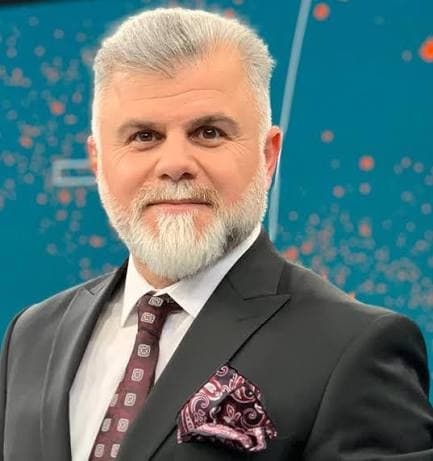
In oil-rich Kirkuk, where Turkmens, Arabs, and Kurds live side by side, Iraqi Turkmen Front (ITF) Chairman Muhammed Seman Ağa’s election as governor resonated as a historic gain in Türkiye as much as among the Turkmen community, since it returned a Turkmen to the post after nearly a century.
The inclusion of a Turkmen figure from the ITF in the city’s rotating governorship system with the PUK’s support is important for fostering a culture of consensus among the city’s different ethnic groups, and it could also give Turkmens a say in public services, employment, infrastructure investment, and the fair distribution of local resources in Kirkuk.
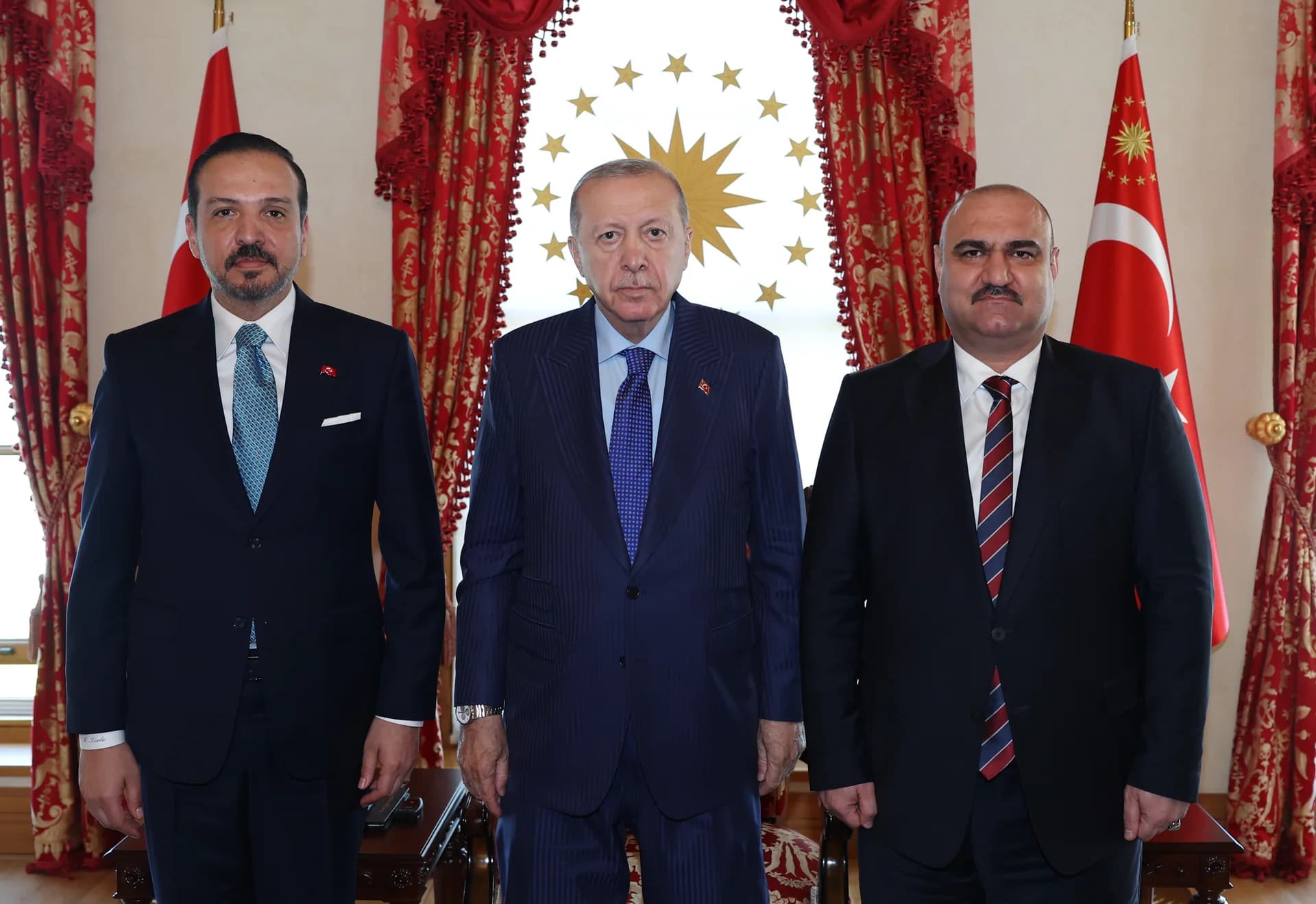
While Türkiye’s multidimensional relations with Iraq and the KRI are laying the groundwork for new political balances along the Baghdad-Kirkuk-Erbil line, they also offer new opportunities for strengthening Turkmen political representation. ITF Chairman Ağa’s statement, “Today, had it not been for this effort, carried out on the instructions and through the strong policy of the President of the Republic of Türkiye, Mr. Recep Tayyip Erdoğan, and had it not been for the support of the institutions, a Turkmen governor could not have been elected in Kirkuk; this is a fact,” shows how much the Turkmens, too, value Ankara’s role.
Ağa’s appointment as a minister of state in the Iraqi central government marked another historic gain for the Turkmens, as it was the first time since 2003 that a figure from the ITF had assumed such a post. Turkmens taking on senior roles in the central government is significant not only for symbolic representation but also for access to decision-making mechanisms. Such representation could put Kirkuk’s administrative problems and public investment, as well as the Turkmens’ cultural rights and educational demands, more firmly on Baghdad’s agenda.
Meanwhile, following Ağa’s appointment as minister, ITF Kirkuk Provincial Chairman Kahtan Vendavi’s concurrent election as the city’s governor is also significant, as it allows the Turkmens to retain their role in the governor’s office at the local level while gaining political representation at the center. The success of this process in Kirkuk, which now has a Turkmen governor for the second time, also requires an inclusive administrative approach that safeguards the rights of all the city’s communities. If the Turkmens pass this test successfully, it will benefit not only their own political representation but also the consolidation of the city’s multiethnic system of governance.
Turkmens could carry their growing role in Kirkuk and Baghdad into Erbil
Undoubtedly, the Turkmens’ position in Iraqi politics is not limited to Kirkuk and Baghdad. Having held posts in the KRI for many years, such as cabinet ministries and the position of secretary of parliament, Turkmens already constitute one of the important social components of the region’s political structure.
The PUK’s withdrawal from the government in response to the reactivation of the KRI’s parliament through the KDP’s efforts after the October 2024 elections has led to a political crisis in the region, while serious questions also remain over how the dispute will be resolved and when the new cabinet will be formed.
In the process of forming the new cabinet, Turkmen politicians are also expected to assume roles similar to those they hold in the current cabinet and parliament. However, the ability of Turkmens in the KRI to carry the momentum of growing political representation in Kirkuk and Baghdad into the region could open the door to new opportunities for Turkmens in this process.
While Ankara’s growing influence in its relations with Iraq and the KRI has acted as a supporting factor in the Turkmens’ gains along the Baghdad-Kirkuk-Erbil line, the Turkmens’ electoral successes, political organization, and skill in forming local alliances and negotiating with other political parties also stand out as a key determining factor in this process. Therefore, explaining the Turkmens’ gains along the Baghdad-Kirkuk-Erbil line solely through Türkiye’s influence would also mean overlooking Iraq’s internal political balances.
In conclusion, Türkiye’s multidimensional and comprehensive policies in Iraq and its foreign policy of engaging directly with every actor make it easier for Turkmen demands to be raised at different levels of government. By acting as a bridge between Türkiye and both Iraq and the KRI through the positions they hold in the country, the Turkmens, for their part, make notable contributions on the ground to advancing existing relations even further. Thus, it can be observed that Ankara’s influence in Iraq and the political representation of Turkmens in the country have recently deepened simultaneously, as two important processes that feed into each other.
Nevertheless, whether the Turkmens’ gains can endure depends, beyond Ankara’s diplomatic support, essentially on the Turkmens increasing their institutional capacity and producing more effective policies within Iraq. For the Turkmens, however, the real success of these gains can be measured by whether the political offices they have secured translate into tangible gains in areas such as education, cultural rights, public services, and economic opportunities for both Turkmens and other ethnic groups.